

HBM4 memory is turning into the real race inside AI accelerators. Peak compute still sells the chip, but inference often stalls when weights, KV cache, and activations cannot move through memory fast enough. The next generation changes the shape of that bottleneck: HBM4 doubles the interface width to 2,048 bits. Micron says its HBM4 reaches more than 11 Gb/s per pin and over 2.8 TB/s per stack. That is the kind of number that changes system design, not just a line on a spec sheet.
Why HBM4 Memory Is Becoming the Constraint
AI hardware discussions still lean on FLOPS. That is useful, but incomplete. An accelerator needs to fetch model weights and repeatedly read and write the key-value cache that grows during generation. For a long-context model, the cache can take a large share of the memory pool. For a batch of requests, the system must make the same trade-off across every active sequence.
Bandwidth shapes how quickly the accelerator can feed its compute units. Capacity shapes which model, context length, batch size, and precision format fit without splitting work across more devices. Neither metric replaces the other. A card with fast memory but too little capacity still forces sharding or offload. A card with ample capacity but limited bandwidth can leave expensive compute waiting.
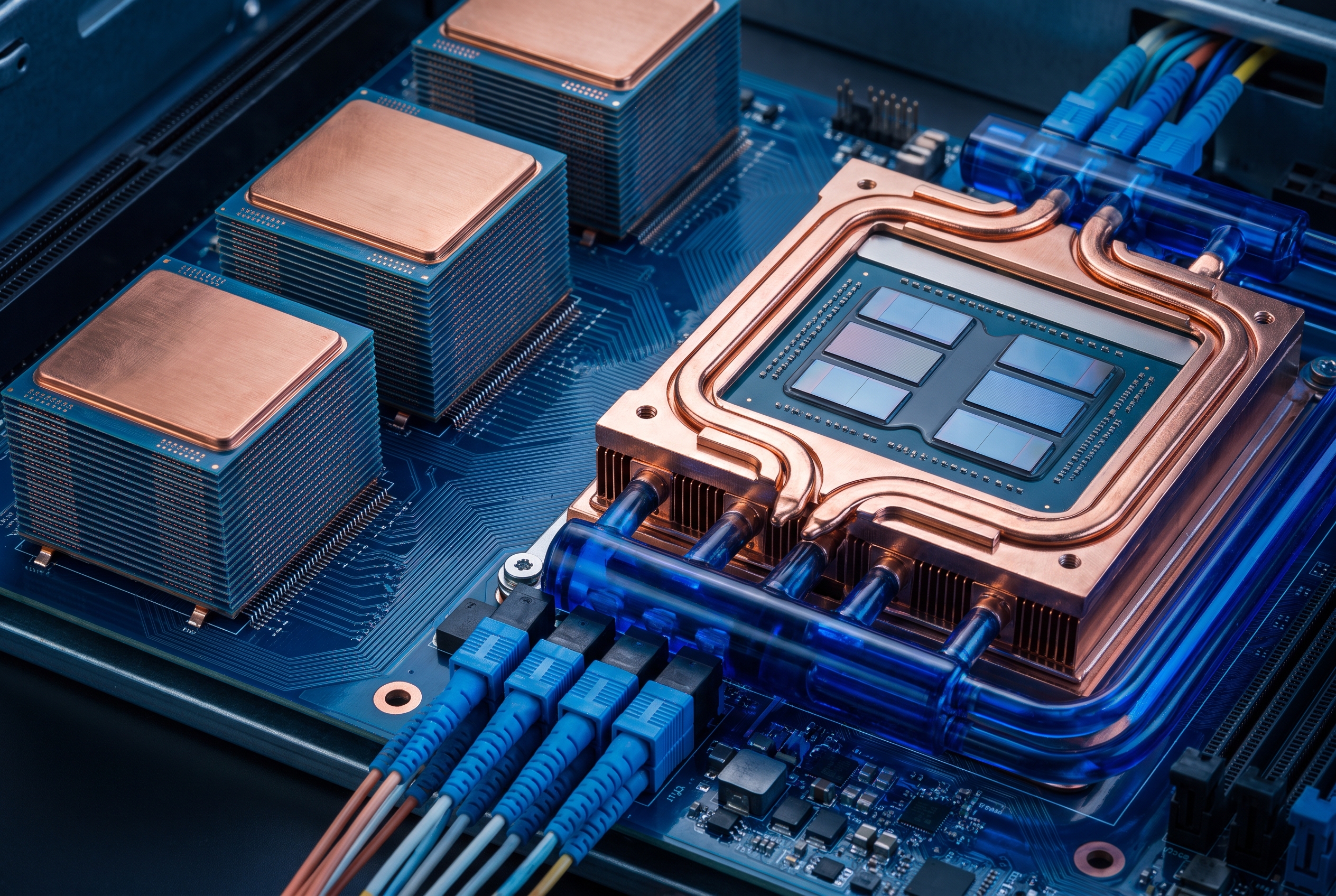
HBM earns its name by placing stacked DRAM close to the accelerator package. It trades the reach of conventional DIMMs for a very wide, short connection. HBM4 takes that interface to 2,048 bits, twice the width of HBM3E. The industry is chasing more bandwidth per stack while pushing density and thermals through taller stacks and tighter packaging.
The Numbers That Change Accelerator Planning
The shift is already visible in vendor disclosures. SK hynix said its 12-layer HBM4 samples deliver more than 2 TB/s and 36 GB per package, more than 60% faster than its HBM3E generation. Micron now lists HBM4 at more than 11 Gb/s per pin and more than 2.8 TB/s per stack. Those claims are product-specific, so they should not be treated as a universal HBM4 baseline. They do show the direction of travel.
| Metric | HBM3E reference point | HBM4 direction | Why it matters |
|---|---|---|---|
| Interface width | 1,024 bits | 2,048 bits | More bits move on each transfer |
| Per-stack bandwidth | About 1.2 TB/s in the cited SK hynix comparison | More than 2 TB/s to more than 2.8 TB/s in vendor claims | Higher token throughput when memory-bound |
| 12-layer capacity | Generation-dependent | 36 GB in SK hynix samples | More room for weights and KV cache |
| Data rate | Varies by product | More than 11 Gb/s claimed by Micron | Raises package and validation pressure |
The memory total becomes striking when stacks are multiplied. TrendForce reported that NVIDIA Vera Rubin could use 16 HBM4 stacks for 576 GB, while AMD MI450 was expected to reach 432 GB. These are reported platform configurations, not a promise that every shipping SKU will carry the same amount. Still, the comparison explains why HBM supply now affects product segmentation. A vendor that has enough validated stacks can ship larger memory footprints. One that does not may need to trim capacity, delay volume, or reserve the best parts for fewer systems.
The bandwidth math also has a practical ceiling. Sixteen stacks at 2 TB/s each suggest an aggregate 32 TB/s memory subsystem before accounting for the accelerator architecture and workload behavior. Software cannot assume all of that is available to one kernel. Access patterns, precision, communication overhead, and cache reuse decide how much turns into delivered tokens per second.
What HBM4 Memory Means for Developers
Developers do not need to wait for a new rack to prepare. Start treating memory as a first-class deployment metric. Record model weights, KV-cache growth per token, active sequence count, context length, quantization, and actual tokens per second. A benchmark that reports only accelerator utilization can miss the reason a service feels slow.
KV cache deserves special attention. Each generated token adds state for every layer, and a larger batch multiplies it again. Long-context chat, retrieval-heavy agents, and multimodal sessions all put pressure on that pool. More HBM4 memory can let an operator keep more work resident, but it does not remove the need for paging policies, admission control, prefix caching, and sensible maximum context settings.
Measure prefill and decode separately. Prefill processes a prompt and often favors throughput. Decode produces token by token and frequently exposes memory traffic. A deployment can look excellent on short prompts then fall apart at 128K context or under a burst of concurrent sessions. The useful test matrix varies context length, output length, batch size, and request arrival rate. It should also log tail latency, not only average latency.
Model parallelism remains relevant. Bigger HBM pools can reduce the number of accelerators needed to host one model, which may cut cross-device traffic. Yet a single-device fit is not automatically cheaper. Compare the cost of idle memory, interconnect load, utilization, and failure domains. The best arrangement depends on the model and traffic pattern.
Why Infrastructure Teams Are Watching Packaging, Not Just Chips
HBM4 is a packaging and supply-chain problem as much as a DRAM problem. The stacks need known-good dies, through-silicon vias, a base die, advanced bonding, testing, and integration beside a large compute package. A defect late in that chain wastes more value than a defect on a commodity DIMM. That raises the importance of yield, thermal behavior, and qualification.
The suppliers are competing on those details. SK hynix says its 12-layer sample uses Advanced MR-MUF packaging to limit warpage and improve heat dissipation. Micron frames its HBM4 around power efficiency as well as bandwidth. Neither claim means a data-center operator can ignore cooling. Denser memory and faster signaling add heat close to the accelerator, where cold-plate design, coolant temperature, rack power, and serviceability already demand care.

Procurement teams should avoid treating the accelerator as a single line item. Ask for memory capacity by SKU, per-stack bandwidth, approved HBM supplier options, liquid-cooling requirements, interconnect topology, and delivery windows. Then connect those answers to a capacity model: how many requests, tokens, or training jobs must the cluster serve at peak? HBM4 availability can change that model before a GPU shortage becomes visible.
It also shifts the risk of vendor concentration. TrendForce reported that NVIDIA sought data rates above the 8 Gb/s JEDEC HBM4 standard for Vera Rubin. A faster target may produce a better platform, but it narrows the set of memory parts that pass qualification. Infrastructure leaders should model a slower ramp as a real scenario, especially for deployments tied to a particular accelerator generation.
Practical HBM4 Memory Takeaways
- Track memory capacity and bandwidth beside compute when comparing accelerators.
- Profile KV-cache growth at real context lengths before committing to a serving architecture.
- Benchmark prefill, decode, throughput, and p95 latency separately.
- Include HBM supplier qualification and cooling design in hardware risk reviews.
- Plan for software efficiency first: batching, cache reuse, quantization, and request limits still matter.
HBM4 memory will not make every model fast by itself. It will, however, decide which accelerators can hold larger workloads close to compute and serve them at useful speed. For developers, that means better measurements. For infrastructure teams, it means memory roadmaps now belong in the same meeting as power, networking, and cooling. Explore current AI models and test workloads on Wiro.