
AI infrastructure capacity is no longer background plumbing. It decides whether a product can answer quickly, accept new users, keep an agent responsive through a long task, or degrade into a queue at the worst moment. For teams shipping AI features, capacity is a product input alongside model quality, prompt design, and interface work.
Why AI infrastructure capacity is a product decision
Classic SaaS capacity planning often focused on requests per second and database connections. AI serving adds a harder mix: prompt tokens, generated tokens, model memory, KV cache growth, GPU or accelerator placement, network hops, and a queue that can change minute by minute. A feature may look fine in a short demo yet fail under concurrent long-context requests.
That changes product choices. A copilot that takes eight seconds to begin answering feels different from one that starts in under a second. A research agent that loses its place because its context window was trimmed changes the result. An image feature with a thirty-second wait may still work in a creative workflow; the same wait makes an interactive editing surface feel broken.
Capacity also shapes which model behavior is affordable. Reasoning models can spend more tokens before they answer. Retrieval pipelines add embedding, search, reranking, and generation steps. Multi-agent systems multiply calls, often with bursty fan-out. The infrastructure team cannot treat those patterns as a later optimization. They need a product forecast before launch.
What the hardware numbers actually mean
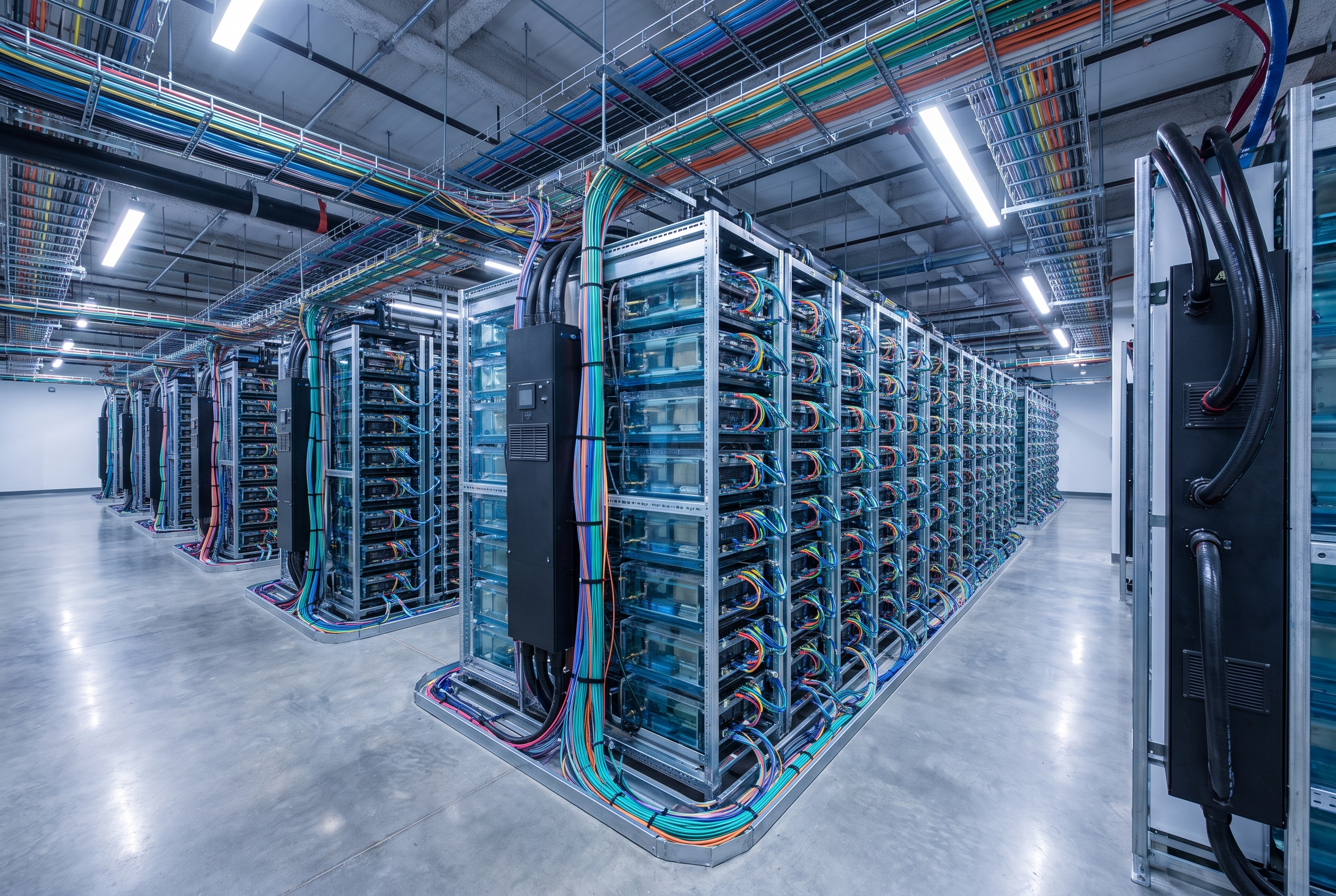
Big accelerator figures matter, but they are not a direct promise of application speed. Google says its Ironwood TPU pod can scale to 9,216 liquid-cooled chips, 42.5 exaflops, and nearly 10 MW of interconnected infrastructure. The same announcement lists 192 GB of HBM per chip, six times the capacity of Trillium. Those are useful signals: modern inference capacity is a system of memory, cooling, interconnect, and software coordination, not a single chip specification.
NVIDIA makes the same point in its MLPerf Inference v5.0 analysis. It reported up to 30x system-level throughput on Llama 3.1 405B for GB200 NVL72 versus the compared system, combining per-GPU gains with a larger NVLink domain. The test constraints are revealing too: the Llama 3.1 405B server scenario targets a six-second time to first token and 175 ms per output token. Throughput without latency targets can hide a poor user experience.
For developers, memory is often the first limit. Model weights occupy accelerator memory, then each active sequence creates a KV cache that grows with context and generated output. A 128k-token request does not consume capacity like a 2k-token chat. Add many concurrent users, tool traces, or multimodal inputs and a deployment can hit memory pressure before its headline compute rate.
Interconnect matters when a model spans devices. Tensor parallelism, expert routing, and distributed cache movement all turn network behavior into token latency. A high theoretical FLOPS number cannot compensate for slow all-reduce operations, uneven batching, or a request that must wait for a free replica.
Measure the serving path, not just the model
Teams need a small, shared scorecard that product and platform engineers both understand. Start with time to first token. It captures queueing, prompt ingestion, scheduling, and model startup. Then track time per output token, end-to-end completion time, and the p50, p95, and p99 for each. Averages smooth away the bad tail that users remember.
Split those numbers by workload. Keep short chat, long-context retrieval, agent runs, batch jobs, and media generation separate. A batch summarization job can use spare capacity and tolerate delay. An interactive coding assistant cannot. That distinction lets schedulers reserve a latency budget for foreground traffic instead of letting a nightly job consume every accelerator.
Watch accelerator memory headroom, cache eviction rate, queue depth, admission rejects, batch size, and network saturation. Token economics belong on the same board: input tokens per request, output tokens per request, tokens per second, and cost per completed task. A cheaper model can cost more if retries and slow responses push users into repeated calls.
Power belongs in the plan too. The International Energy Agency projects global data-center electricity consumption to reach about 945 TWh by 2030 in its base case, more than double its current level. Capacity planning therefore includes power delivery, cooling, rack density, and the lead time for a utility connection. Software choices that lower token work or improve batching can defer a physical constraint.

Design for variable capacity
Do not promise a single latency number for every request. Set a service tier or explicit interaction contract. For example, return a fast outline before a deep research result, stream visible progress for agent work, and make background generation resumable. The product stays useful when a provider is busy or a region loses capacity.
Use admission control before the cluster is saturated. Limit concurrent long-context tasks per tenant, cap runaway tool loops, and route low-priority jobs to a delayed queue. Cache stable system prompts, embeddings, and repeated results where it is safe. Precompute work that users do not need to wait for. These are product decisions because they decide who receives fast service when demand spikes.
Model routing should be intentional. A smaller model can classify, extract, or draft while a larger model handles the hard decision. Keep a tested fallback model for each critical path, but validate output format and safety behavior first. Switching providers under pressure without those tests just moves the outage into application code.
Run load tests with realistic token distributions, not only identical toy prompts. Include long inputs, abandoned streams, tool failures, concurrent uploads, and burst arrivals after a notification or product launch. Test the recovery path as well: a full queue, an unavailable region, a model timeout, and a cache miss storm should all produce a clear product behavior.
A practical planning loop
- Define the user-visible latency target for each workload before choosing hardware or a model endpoint.
- Forecast requests, token lengths, concurrency, and burst size separately; one blended request-per-second value is not enough.
- Reserve capacity for interactive traffic and send batch work to a controlled queue.
- Set alerts on queue age, p95 time to first token, memory pressure, and error rate, not only accelerator utilization.
- Review cost per successful task alongside quality and latency after each product change.
The useful question is no longer simply which model scored highest on a benchmark. It is whether the system can deliver that model behavior at the response time, reliability, and operating envelope the product promises. Capacity is part of the feature.
Sources
Technical figures in this article are drawn from Google Cloud’s Ironwood TPU announcement, NVIDIA’s MLPerf Inference v5.0 analysis, and the IEA Energy and AI report.
Explore current AI models and test the tradeoffs on Wiro.