Grok Imagine Image V2 and Seedream V5 Pro Uncensored produced usable images from the same five briefs, but they reward different operating habits. This expanded comparison keeps the original 1K, 3:2 test set and looks beyond the first impression: instruction handling, layout control, iteration cost, handoff risk, and the technical choices that matter when images feed a product, a campaign, or an automated content pipeline.
Grok Imagine Image V2 leans toward exploratory generation and precise edit-oriented work. Seedream V5 Pro Uncensored is the better fit when the brief already has a visual system: a fixed hierarchy, references, product constraints, or a layout that must survive several revisions. Neither result replaces review by a designer or content owner.
Grok Imagine Image V2 test setup
Both models received the same five prompts at 1K in a 3:2 frame. That constraint matters. A comparison that changes aspect ratio, prompt wording, or resolution between models mostly measures the setup, not the model. The five prompts covered miniature-world composition, product photography, typography, macro repair work, and a deliberately overloaded surreal scene. They were selected to force the models to resolve lighting, scale, materials, small objects, and multiple relationships in a single image.
| Setting | Grok | Seedream |
|---|---|---|
| Resolution | 1K | 1K |
| Frame | 3:2 | 3:2 |
| Prompts | Five identical prompts | |
| Review criteria | Prompt adherence, composition, text risk, editability, and production handoff | |
The 3:2 choice is practical rather than cosmetic. It maps well to editorial images, product photography, and many CMS hero slots. xAI’s current image-generation documentation lists 3:2 among supported photography-oriented aspect ratios and supports 1K or 2K output. That gives an infrastructure team a clear control point: hold ratio and resolution steady in automated jobs, then compare failures on the same canvas rather than guessing why a crop changed.
Test 1: underwater library
Prompt: A yellow research submarine drifting through an underwater library. Fish circle tall glass shelves. Sunbeams, realistic miniature set, no text.
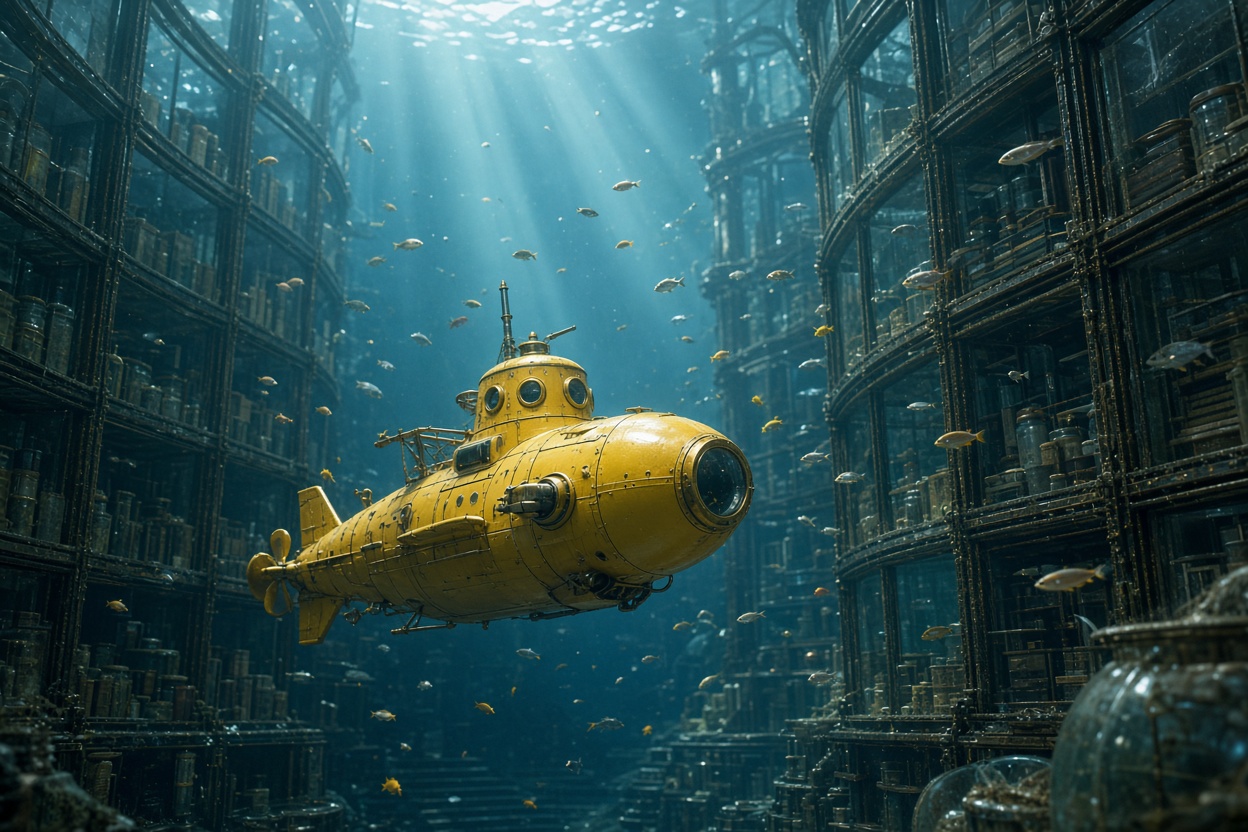
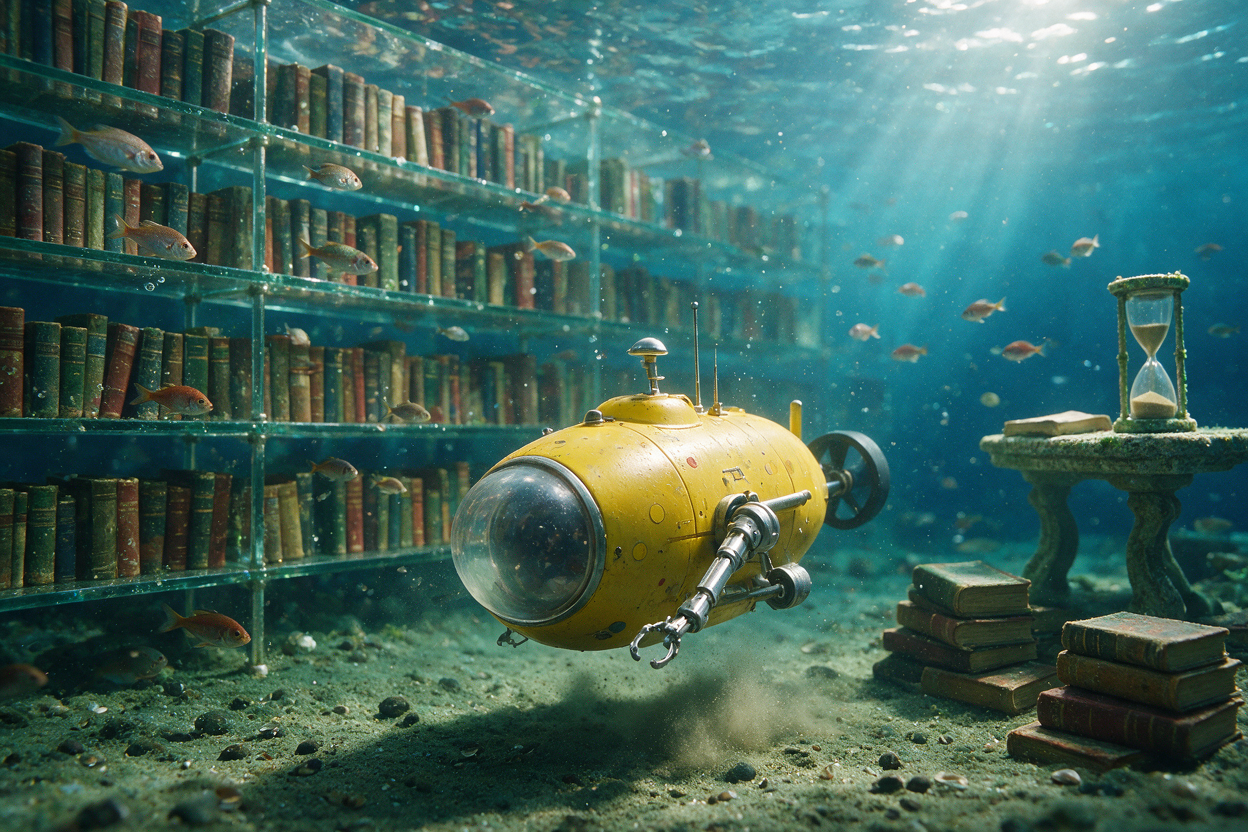
This scene checks more than atmosphere. The submarine must read as small but intentional; glass shelves need to sit behind water and fish without merging into visual noise; the light needs a direction. Grok produced the more open-ended, cinematic interpretation. It made the scene feel discovered rather than diagrammed. Seedream held onto the brief with a more designed feel, which can be useful when the image will receive copy, a logo, or a product callout later.
For a developer, the difference affects the review loop. An exploratory image can be the fastest way to find an art direction, but it creates more downstream selection work. A structured output may reduce the number of variants a team needs to inspect before it reaches a template. That is not a universal quality ranking. It is a queue-management decision.
Tests 2-5: what the hard prompts reveal
Alpine weather station
The weather-station prompt asked for a small industrial object, cold blue-hour lighting, cables, weathered metal, and believable snow. This is a good product-realism test because one wrong material can make the whole image look synthetic. Grok was the stronger option for mood and environmental storytelling. Seedream made more sense when the goal was a product-led composition that could become a campaign module after human cleanup.
Night Line poster
The poster combined an editorial train image with a headline and small supporting text. Treat generated text as a verification point, not a delivery guarantee. xAI says Imagine Image 2.0 was built for sharper small text and denser layouts, but the safe production practice remains the same: render the final copy in a design tool or inspect every character before publishing. The model output can establish hierarchy, spacing, and image placement; it should not silently become the source of record for legal copy, dates, prices, or calls to action.
Ceramic repair robot
The macro scene stressed hands, tools, reflective gold seams, depth of field, and tiny surface defects. It exposes a common pipeline problem: an image can look convincing at thumbnail size and break under a crop or a high-density display. Keep the source image with the prompt, model version, resolution, and seed if the provider exposes one. That metadata makes a failed rerun diagnosable instead of anecdotal.
Greenhouse on a whale
The final scene intentionally stacked transparent surfaces, an impossible scale relationship, multiple people, storm light, and architecture. It was not a request for realism. It was a prompt-adherence stress test. Grok handled the imaginative premise well; Seedream gave the team a more system-ready starting point when repeated structures and compositional hierarchy mattered. For this kind of work, teams should score outputs against named requirements rather than asking whether an image merely looks good.
What this means for developers and infrastructure teams
Image models often enter a stack as a single API call, then become an operational concern once a product team adds retries, storage, moderation, resizing, and human approval. xAI documents batch generation from 1 to 10 images per request. A batch can shorten the time to a creative choice, but it also multiplies asset handling. A service should assign each result a job ID, original prompt, model identifier, aspect ratio, requested resolution, creation time, and approval state before a CMS or CDN receives it.
Resolution is another real tradeoff. At 1K, these tests are suitable for fast concept review and many web placements. At 2K, xAI supports higher-detail output, but the file and processing path get heavier. Run crops and compression checks on the actual delivery channel. A clean 2K render can still look poor if a later image proxy recompresses it, strips a color profile, or applies an unsuitable crop.
Editing capability changes the architecture too. xAI says Image 2.0 supports region-directed edits, background removal, and up to five input images for multi-reference editing. That can reduce manual compositing, but it also raises reference-asset governance questions. Store the source-image rights and the intended edit scope with the request. Do not let a general-purpose worker pull arbitrary customer files into a generation job.
Seedream’s official Volcengine documentation lists the Seedream 5.0 series alongside image-generation and interactive-editing material. In practice, that makes it sensible to test Seedream where an existing design system or reference image drives the work. The “Uncensored” label on the Wiro listing should also be treated as a deployment-specific choice, not evidence that generated assets bypass a company’s own policy. Safety review, provenance, and publication approval still belong in the application layer.
A simple production pattern works well: validate prompt inputs; generate a small bounded set; run policy and file checks; create thumbnails; send only approved candidates to a reviewer; then publish the selected asset with immutable provenance. Add timeouts and idempotency keys around the job boundary. If a request retries after a network failure, it should not accidentally create two CMS records or charge a downstream workflow twice.
For teams comparing providers, record more than a subjective winner. Track first-pass acceptance rate, median time to an approved asset, reviewer edits per selected image, failed-job rate, and storage growth per campaign. Those numbers reveal whether a model’s apparent creative advantage survives contact with a real publishing system.
Verdict: choose the model that fits the handoff
| If you need | Pick | Why |
|---|---|---|
| Creative scenes and broad visual exploration | Grok Imagine Image V2 | It better supports a cinematic, discovery-led workflow. |
| Posters, UI-like layouts, and campaign art | Seedream V5 Pro Uncensored | Its more structured feel suits work headed into a visual system. |
| Reference-guided iteration | Seedream V5 Pro Uncensored | Start here when the design system drives the brief. |
| Precise edit workflow and multi-reference work | Grok Imagine Image V2 | xAI documents region edits and up to five input images. |
There is no universal winner. Choose Grok when the image needs to reveal an idea, then inspect the output closely. Choose Seedream when the image already has to fit a system. In both cases, make approval, provenance, and delivery checks part of the workflow rather than an afterthought.
Run the same prompts yourself: try these models on Wiro. For implementation details, see xAI’s Imagine Image 2.0 announcement, xAI’s image-generation documentation, and Volcengine’s Seedream 5.0 release record.