Agentic video understanding turns a video question into an inference-routing problem. Instead of paying to process every frame at one fixed rate, a system can search a transcript, retrieve a rough time range, resample a few seconds at higher frame rate, inspect objects, then return an answer or trigger a tool. That changes the cost model for developers building video search, safety review, editing, warehouse monitoring, and meeting intelligence.
Why agentic video understanding changes the serving bill
Video does not arrive as one neat prompt. It arrives as frames, encoded audio, speech, scene changes, object tracks, timestamps, and long stretches that do not matter to the question. A fixed pipeline normally chooses a sampling rate before it knows where the answer lives. At 1 frame per second, a 90-minute recording produces 5,400 sampled frames. Raise the rate to 10 FPS to catch a quick action and that becomes 54,000 frames. The model may not see all of those as separate images, but the encoding, embedding, transfer, storage, and visual-token budget still rise with coverage.
Google describes its agentic mode as an alternative to static processing at a fixed FPS. The model can search, scan, and inspect selected segments across frames, audio, and transcripts. In the companys published benchmark results, agentic video understanding cut token consumption by up to 88%, lowered analysis cost by up to 66%, and improved accuracy by up to 7%. Those are vendor-reported results, not a universal capacity plan, but they make the engineering point clear: coverage should be adaptive.
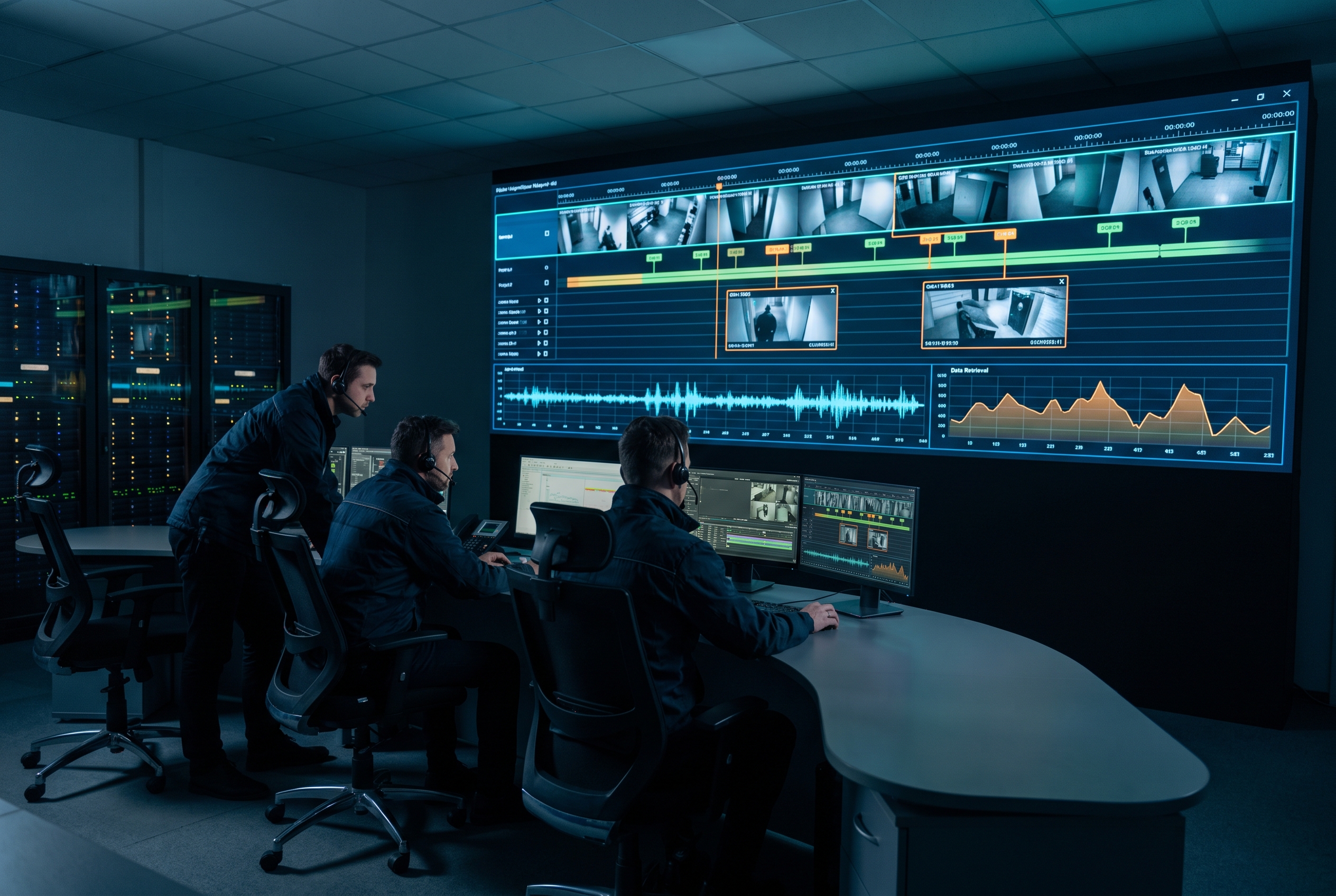
The inference loop is a scheduler, not a single model call
A useful system starts with a cheap pass. Extract audio, generate a transcript, build coarse scene or shot boundaries, and store timestamps with embeddings and metadata. A user question then becomes a plan: find candidate moments, fetch the associated clip, inspect the relevant modality, and decide whether another tool call is justified. A question about what a speaker promised needs audio and transcript retrieval. A question about whether a forklift crossed a painted line needs frames, detection, tracking, and temporal logic.
This is where agentic video understanding differs from a larger context window alone. More context helps, but it does not decide which 12 seconds deserve 15 FPS inspection. The controller has to trade recall against work. A good policy asks for a coarse answer first, records confidence, and escalates only when evidence is weak or the requested event is fast. It should also return evidence: clip IDs, timestamps, model version, and the retrieved frames used for the decision.
The research problem gets harder at long horizons. The 2026 Agentic Very Long Video Understanding paper reports 57.5% on EgoLifeQA and 74.1% on Video-MME Long for its EGAgent approach. Its design joins visual search, audio search, and entity scene graphs so a query can follow people, objects, locations, and relationships over time. That is a better mental model than treating a week of footage as a single oversized prompt.
What developers and infrastructure teams need to design for
The first bottleneck is rarely just GPU FLOPS. Decode can saturate CPUs or dedicated video engines. High-resolution clips stress PCIe paths and host memory. Embedding every frame can create a large write stream for vector storage. Re-ranking or high-FPS resampling creates bursty GPU demand. Teams should measure each stage separately: ingest seconds per video minute, decoded frames per second, retrieval latency, visual-token count, GPU queue time, and end-to-end answer latency.
Split the system into at least three queues. The ingestion queue handles uploads, transcription, coarse segmentation, and embeddings. The interactive queue serves user questions and has a strict latency budget. The escalation queue runs expensive rescans, detection, or high-FPS analysis. Without this separation, a backfill of archived footage can starve a live alert workflow. Backpressure matters too. If retrieval returns 50 candidate clips, the planner should rank and cap them before sending pixels to a vision model.
NVIDIA makes a similar systems argument in its video search and summarization blueprint. Its production-oriented stack combines VLMs, LLMs, retrieval, audio transcription, object detection, segmentation, and tracking. The blueprint also calls out separate contexts for concurrent streams and low-memory modes for single-GPU deployment on A100, H100, and H200 hardware. The practical lesson is not to copy one vendors stack. It is to treat video understanding as a pipeline with state, not a chatbot endpoint.
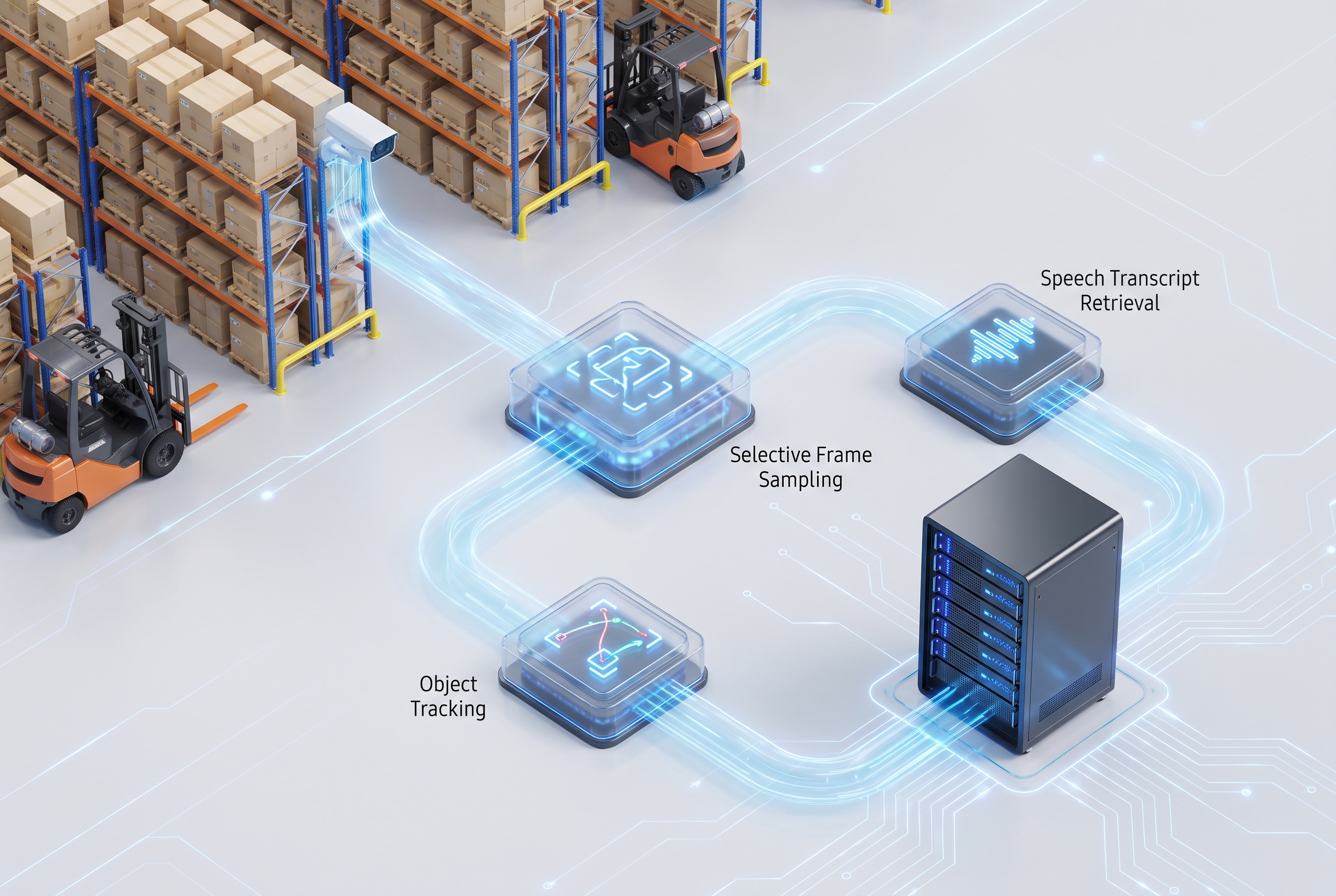
Practical design rules for agentic video understanding
- Store time as a first-class key. Every transcript chunk, embedding, detection, and thumbnail needs a stable video ID plus start and end timestamps.
- Start coarse, then zoom. Use low-rate sampling or shot summaries to find candidates. Spend high-rate analysis on only the candidate windows.
- Route by modality. Do not send pixels when text answers the question. Do not trust transcript search for a visual anomaly.
- Set an escalation budget. Cap tool calls, clip duration, frames per clip, and wall-clock latency per request. Log when the cap changes an answer.
- Evaluate temporal failures. Test cut boundaries, brief actions, repeated objects, occlusion, and questions that require evidence from separate times.
- Keep the evidence. A useful result includes timestamps and retrieved clips, so reviewers can check it and developers can debug bad plans.
Quality metrics need the same discipline. Track answer accuracy, temporal localization error, cost per resolved question, p50 and p95 latency, and the fraction of queries that trigger escalation. A system that wins a static benchmark but always sends 30 clips to the largest model may lose in production. One that spends too little can miss a safety event. The operating target is the smallest amount of compute that produces auditable evidence at the required confidence.
For teams evaluating the approach, begin with a bounded corpus and a question set tied to real work. Include easy transcript questions, visual-only questions, fast-action questions, and multi-hop questions across separate clips. Compare fixed 1 FPS sampling with a retrieval-plus-escalation policy. The result will show whether the agent saves inference or merely moves cost from the model to the surrounding services.
Sources
- Google DeepMind: Introducing agentic video understanding with Gemini
- Rege et al.: Agentic Very Long Video Understanding
- NVIDIA: Video analytics AI agents with video search and summarization
Agentic video understanding will reward teams that measure retrieval quality, temporal coverage, and inference spend together. Explore visual AI workflows and run models for your own evaluation on Wiro.